

Empty water, and where the phrase came from
A business book from about twenty years ago gave this two names. A red ocean is the water everybody is already fishing, where the boats are close enough to shout across and the only levers left are price and how good your thumbnail looks. A blue ocean is water nobody has got round to. The point of the book is that you should stop trying to win the comparison and set up somewhere the comparison doesn't happen.
Most business books are one true chapter and a hundred and eighty pages of examples about airlines. That is the true chapter, and I have never met a practitioner who needed the rest of it.
Two things while we're up at the top, because they decide whether the rest of this is worth your evening. Narrowing a description does not create demand. If nobody wants the thing, a more specific sentence about it still leaves nobody wanting it, and no amount of positioning rescues a subject with nothing behind it. And I have not measured what a narrow description does to sales against a wide one, ours or anybody else's, so you will not find a single figure on this page.
The two hundredth beginner's course
Here is what a wide description does to you, and it does it quietly enough that you never see it happen.
You write: an eight week beginner's course in meditation, $120. Everything about that sentence is true and everything about it is an invitation to be compared. Somebody opens four tabs. Yours, and three others that are also eight weeks, also for beginners, also meditation. From the outside those four differ by length, price and production, and that's it. You lose that comparison to whoever spent money on a camera, or you win it by being the cheapest, which is a thing you can do exactly once.
Nothing has gone wrong here. That is the part people miss when they conclude the market is saturated. The teaching is good, the subject is fine, the price is reasonable. The description put you in a queue.
And a queue is a strange place for you specifically to stand, because you are the only person in it who knows the seventy things you know about the four people you have actually taught this to.
A narrower sentence, not a smaller subject

The material doesn't change. This is the bit that surprises people, so it is worth being blunt about: you are not cutting the course down, and you're not learning anything new. You already teach the narrow version in the room. You just describe it widely the moment you write it down, because widely feels safer.
Three examples of the same knowledge, described narrowly:
- Reiki level two, for people who did level one three years ago and have never practised on anyone but the cat.
- Breathing practice for people who work nights and try to sleep while the street is awake.
- Ten evenings of gentle movement for people who last did anything like it at school and would rather nobody watched.
Not one of those is a smaller subject. Each one is the same eight weeks with a person named in the first line. And a person named in the first line stops shopping, because there is nothing to line yours up against.
If you're still deciding which of the things you know should be the course in the first place, that is the earlier question and it has a page of its own. This one assumes the subject is settled and only asks who it is for.
The part of it nobody can copy
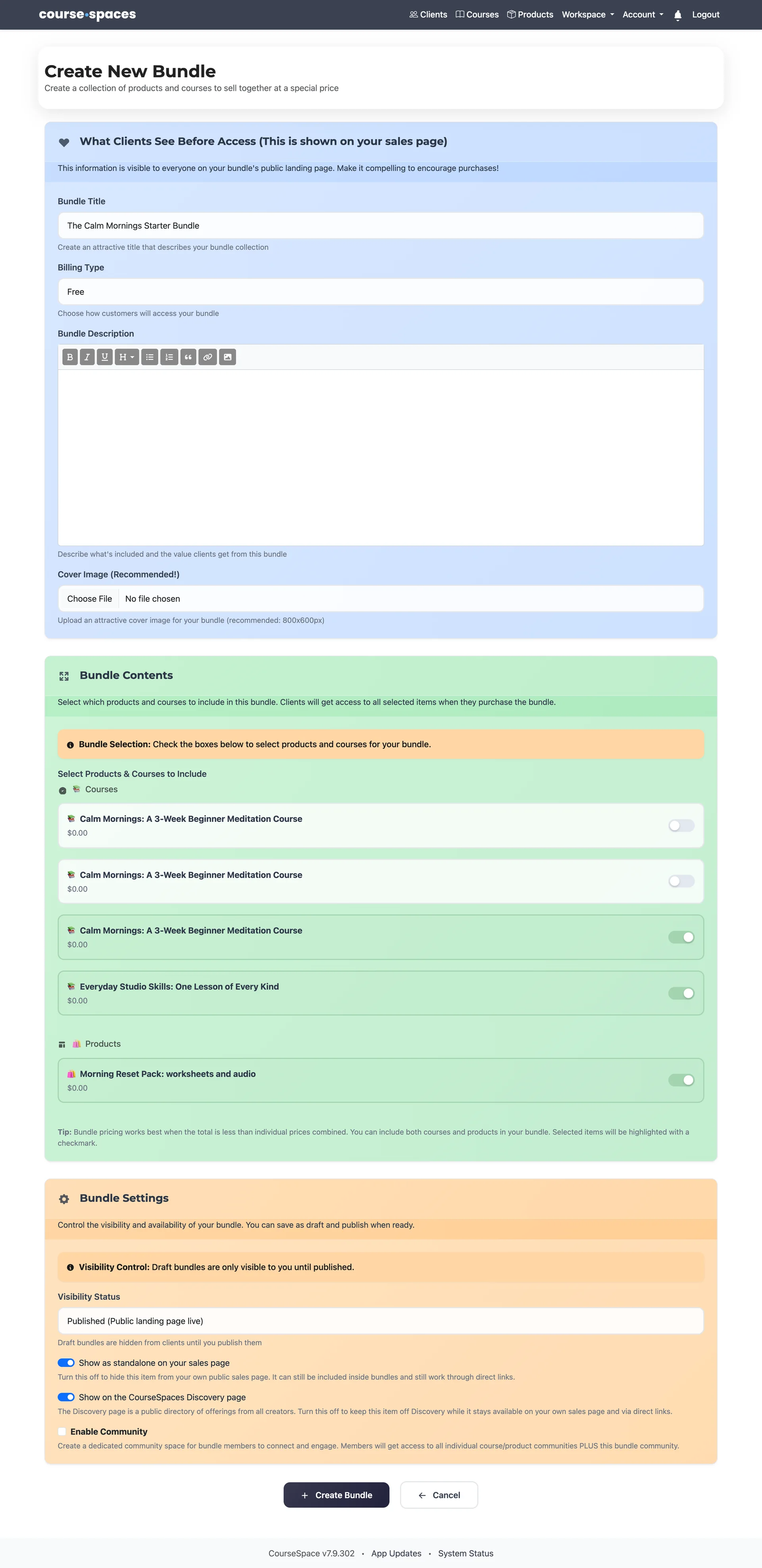
A curriculum can be copied in an afternoon. Anybody can read your eight module titles and write eight of their own, and if the description is wide enough, theirs will be a perfectly good substitute for yours.
What can't be copied is the combination. Your subject, plus the exact people you have spent years in a room with, plus the way you work with them. If the course you sell is a course that came out of something you have been teaching for years, and beside it there is a room where those particular people talk to each other, and once a month there is an hour with a date on it, then the thing on offer has four parts and only one of them is copyable.
That is the whole of it, really. Sell a course and you are in a comparison. Sell a course wrapped in a place, for a named person, and there's nothing to compare it with.
Narrow is what a person can actually find

Think about how you search when it's you doing it, at eleven at night, mildly desperate. Nobody types meditation course. They type the whole specific mess: can't sleep after night shifts breathing, or reiki refresher after years off. The long specific string is what people type when they genuinely want something, and the wide page can never be the answer to it, because it was written to be the answer to everything.
There's also a public directory of what people here sell, which visitors browse with filters. A wide listing sits in it as one of many. A narrow one is either exactly what somebody wanted or clearly not, and both of those are more use to you than being nearly relevant.
Testing it before you give up a weekend

The sentence is the work. Getting it right takes a walk and about four goes, and it is free.
Building the thing behind it used to be the expensive part, and that's what's changed. You type in who it's for, what they should be able to do at the end, and roughly how many sections you want, and the first draft of the course comes back in about ninety seconds. It's a draft. It is general, it doesn't know your people, and you'll rewrite most of it in your own words over an evening or two, which is where your seventy things go in.
That matters here because a narrow offer is a bet, and the cost of testing a bet decides how many you can afford to be wrong about. Write the narrow sentence, generate the draft, put a landing page under it, and send it to the eleven people on your list who fit the description. If none of them bite, you spent an evening. Try the next sentence.
When narrowing is the wrong move
- Nobody has said it to you yet. If the narrow version came off a whiteboard rather than out of something a client said in a session, you're guessing at a person. Go and ask four of them what they wanted before they came to you, in their words, and use those.
- The narrowness depends on a claim you can't make. If the only thing that separates your version from everyone else's is what it does to somebody's health, that is a page you're not allowed to write, and no software fixes that. Narrow on the person and the situation instead.
- You already have something wide that sells. Then leave it alone. A wide course with buyers beats a narrow one with a theory, and the time to narrow is when the wide thing has stalled.
- You want one course that suits everybody. That's a legitimate business and this isn't the argument for it. It is a volume game, and it wants a marketing budget rather than a better sentence.
What it costs to try

One plan, $47 a month. Unlimited courses and products, 1,000 active students, hosted video with 1TB of bandwidth a month, the AI course builder, the AI assistant at 1,500 messages a month, unlimited communities and the page builder for the landing page you'll put under each attempt. There is no tier above it, so a narrow experiment costs the same as a wide one.
We take 0% of what you sell. You bring your own Stripe account and keep everything except Stripe's own 2.9% plus 30 cents. The trial runs 30 days and doesn't ask for a card, and there's a 30-day money-back guarantee after that.
So the smallest useful version of this week is: write one sentence with a person in it, generate the draft, and send it to the handful of people that sentence describes. You'll know inside a week whether you have found water nobody else is fishing.