

What it takes to sell a coaching course online
Something to buy, set up as a course. A page that explains it to somebody who has never met you. A way for that person to pay. And a way in, immediately afterwards, that doesn't depend on you being awake.
In most setups those four live in four different places. The material is on your laptop, the page is on a website somebody built for you in 2021 and whose password you've lost, the payment is a link from a separate service, and the way in is you, attaching files to an email at half past ten at night. The reason day one turns into six weeks is not that any single one of those is hard. It is that they are four jobs with four learning curves, they have to agree with each other about the price and the name, and every one of them has a setting somewhere that will silently undo the other three.
Day one means the shop is open. It does not mean the course is good, and it certainly doesn't mean anybody's coming. Those are the next two problems and both are bigger than this one.
What happens after somebody buys, which is the coaching itself, is a different set of jobs and I've written those out separately. This page stops at the moment a stranger logs in.
First, turn the document into a course

A document is a thing you read. A course is a thing somebody moves through, in an order you chose, with a place they get to come back to. The gap between the two is mostly structure, and structure is the part that eats the evenings.
You type a sentence saying what the course teaches, choose how many sections and how many lessons in each, and say who it is for. It writes the first draft: the sections, the lessons, and the text inside them. That is the single most useful thing this software does, and it is useful for a reason that sounds backwards. What comes back is not your course. It is a scaffold with roughly the right shape, wrong in the places where your judgement lives, and staring at something wrong is enormously easier than staring at nothing. You spend your evening editing instead of beginning. Most people who have stalled for a year stalled on the blank page.
Then you cut. That's the real job and it stays yours, because deciding what to leave out is the decision that makes a course a course, and no software has an opinion about which of your favourite material is in the way.
The page a stranger reads when you're not there
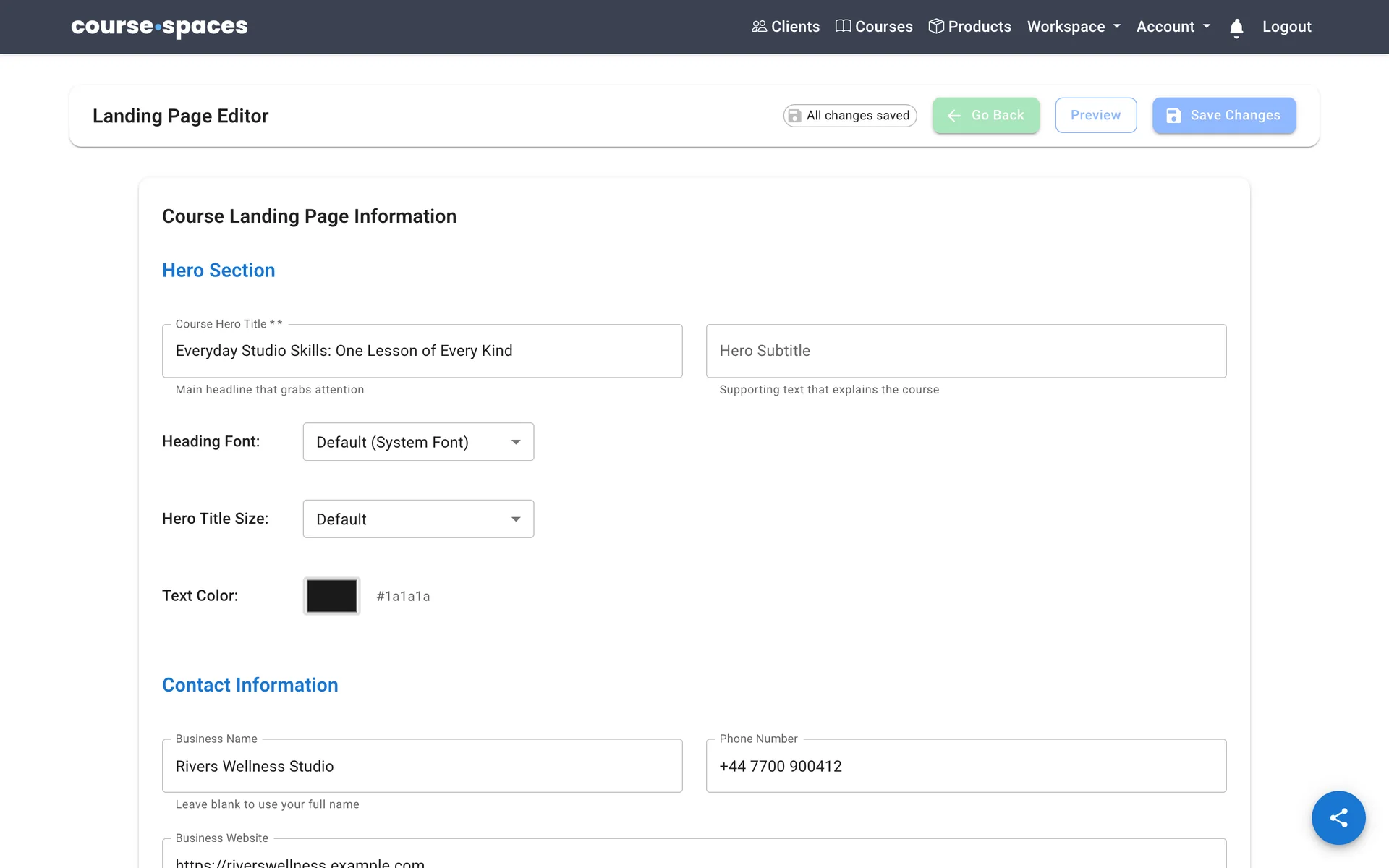
Every course can have its own landing page. You write what the course is and who it is for, answer the questions people always ask, and set your colours.
It is a form. You fill in boxes and the page exists, which matters less for how it looks than for what it removes: no developer, no theme, nobody to wait for. What you write in those boxes is the harder half, and the three sentences that carry a sales page are worth getting right before you publish it.
One thing to be straight about while we're here, because it comes up. You can point your own domain at your portal. What we do not offer is full white-label hosting, where every address a student sees is yours. For most coaches that distinction never surfaces. If it matters to you, it matters now rather than in month three.
Where the money moves

You connect your own Stripe account. The money goes from the buyer to you, and we take none of it. Stripe takes its own 2.9% plus 30 cents, and that is the whole of what a sale costs you.
The screen above is where you decide which of those three a thing is, and that one choice is most of your business model. One-time for a course somebody buys once. Subscription for a membership. Free for the short thing you give away to people who are not ready yet. Somebody can buy through guest checkout without making an account first, which sounds like a detail until you count how many people abandon a purchase at "create a password". Coupons exist for the discount you were going to give your existing clients anyway.
The ten minutes after somebody pays

This is the part that is normally you, manually, and it's the part that decides what a buyer thinks of you before they've read a word.
They pay, and access is granted. They log in and see your name and your colours. The course is there, the lessons are there, and if you've set lessons to release over time, they do it without you having to remember. The emails that go out as they work through it are yours to write once and never think about again. None of that is you at half past ten at night, and none of it is different for the first buyer than for the fortieth.
Nobody launches a village hall
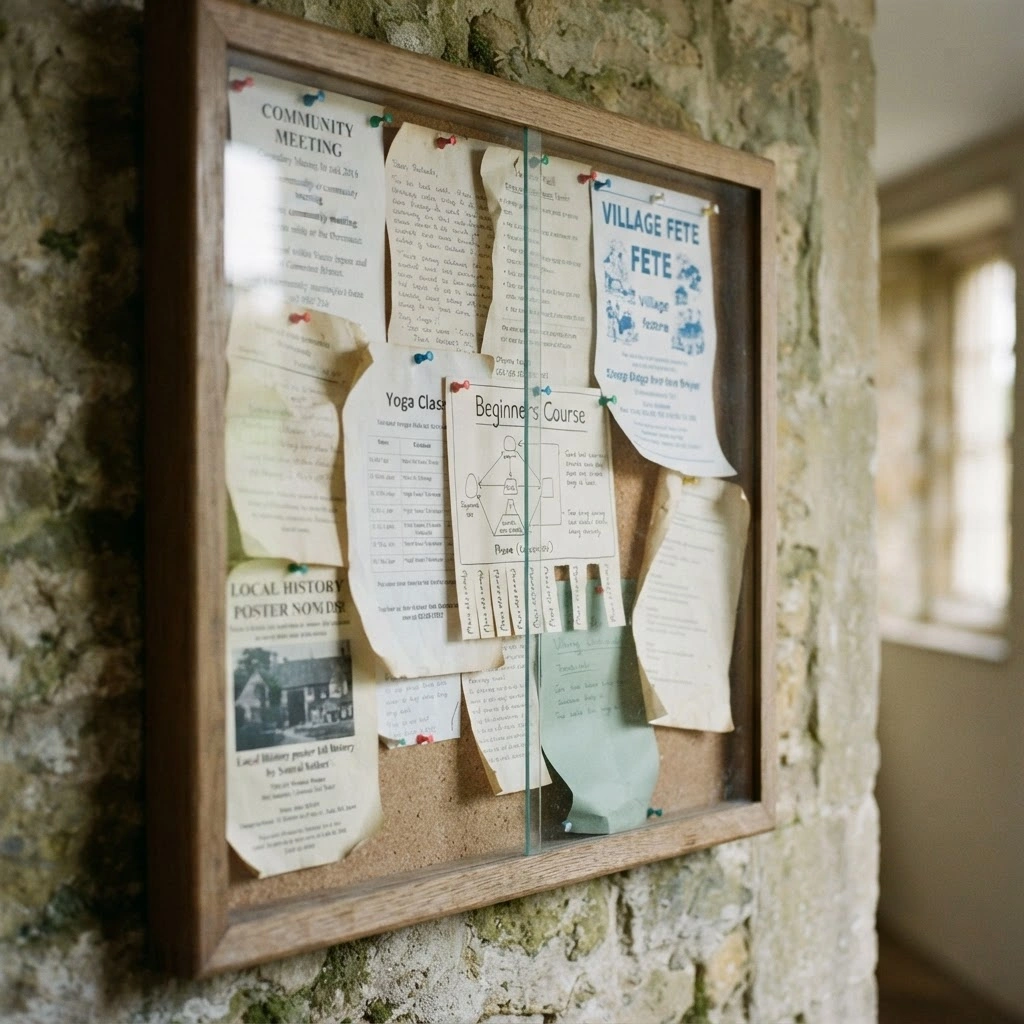
A short opinion that won't help sell you anything. The word "launch" is borrowed. It comes from people selling to a list of ten thousand strangers, where the whole game is compressing attention into a single week, and it's been handed down to practitioners who are selling to about forty people who already know them. Your first sale is almost certainly going to be to somebody who has sat in your room. That does not need a countdown. It needs the page to exist so you can send her the address.
I've come to think the launch theatre is why so many good coaches never open at all: they're waiting to feel ready for an event that was never their event.
Three setups where this is the wrong move
- You have nobody to sell to yet. Day one opens the shop. It doesn't bring anybody through the door, and finding the first handful of students is a separate job with its own weeks in it.
- What you are selling is really a series of calls. If the value is entirely in your time and the course is furniture around it, you need a calendar and a payment link more than you need this.
- You want the software to decide what to charge. It will not, it has no view, and anybody who tells you there is a formula is selling you the formula.
What $47 a month covers
One plan, one price, no tiers to read. It carries up to 1,000 active students, unlimited courses and products, hosted video with 1TB of bandwidth a month, the AI course builder, the AI assistant at 1,500 messages a month, unlimited communities and chat, the sales page builder, coupons and drip campaigns for your students. We take 0% of what you sell.
The trial is free for 30 days and does not ask for a card. If you pay and it turns out to be wrong for you, there is a 30-day money-back guarantee.
Try it on the course you already wrote

You don't need a new idea for this. Take the six sessions in the notebook, put them in, price the thing, and send the address to one person who has already asked you when you're running it again.
That is a real day one, and it fits into a few evenings.